






Alcohol-free red wines: our selection
49 references from alcohol-free red wines, from light fruity to more robust with real tannins. Coming from real vinification then dealcoholized to less than 0.5% alcohol, they retain the tannic structure and balanced acidity of a traditional red wine.
The technical challenge of alcohol-free red wine
Red wine poses a particular challenge: alcohol actively participates in the perception of tannins and the sensation of body in the mouth. Without it, a poorly controlled dealcoholized red wine can seem flat or too acidic. The best houses compensate by working on skin maceration (prolonged contact with the skins to extract more tannins and color before fermentation) and by selecting grape varieties naturally rich in structure, such as merlot or pinot noir. The Zeronimo estate, a benchmark in the sector, relies on this approach to obtain reds that retain a real chewiness in the mouth.
Our number 1 reference
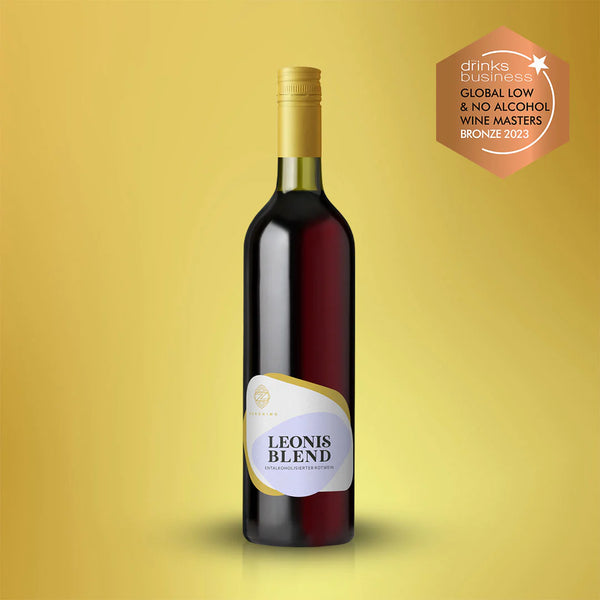
The Zeronimo Leonis Blend from Domaine Heribert Bayer is our absolute best-seller in this category, acclaimed for its structure and roundness close to a traditional red wine. An excellent entry point for anyone discovering alcohol-free red wine.
How to serve it
Between 14°C and 16°C, slightly cooler than a classic red wine served at room temperature — this extra freshness helps balance flavors, which can seem flatter without the warming effect of alcohol. Use a wide glass to promote aeration and allow the aromas to express themselves.
Food and wine pairings
White meats, roast poultry, light stews: avoid pairing them with dishes that are too rich or powerful (grilled red meat, game) which would overwhelm the more delicate structure of dealcoholized red wine.
FAQs
Does a non-alcoholic red wine really have tannins?
Yes, thanks to careful skin maceration during vinification — even before dealcoholization, prolonged contact with the grape skins extracts the characteristic tannin structure.
Why serve it cooler than a classic wine?
Without the heating effect of alcohol, a slightly lower temperature (14-16°C instead of 16-18°C) allows the acidity to be better balanced and avoids a too flat result.
Can we decant it?
This is not recommended — unlike a classic wine where decanting softens the tannins, an alcohol-free wine oxidizes more quickly and quickly loses its aromas with prolonged contact with air.
Explore the rest of our selection
Also discover our non-alcoholic white wines, our alcohol-free rosé wines, or find all our alcohol-free wines.
